
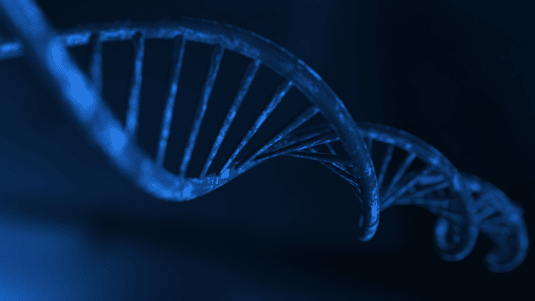
If you’ve been blaming your lack of gains in the gym on your genetics, I’m here to discredit that theory…
While it’s true that you can’t change the DNA you’re born with (probably), it turns out that you can alter your gene ‘expression’ – the study of which is known as ‘epigenetics’. This basically means that it’s possible to change the way your genes behave and even to turn them on and off in order to make yourself more immune to disease, stronger, thinner or even smarter.

What is Gene Expression?
Here’s something you might not have considered before:
Seeing as every single cell in your body contains identical genetic code and this tells the cell how to behave, how do your muscle cells know to behave differently from your brain cells? If they have the precise same ‘blueprint’, how can they be so different?
How do your muscle cells know to behave differently from your brain cells?
This is the result of gene expression and something called ‘methylation’. Essentially, methylation is a molecular process in which certain chemicals (called methyl groups) attach themselves to your DNA and there by prevent specific genes from functioning as they normally would – it prevents ‘gene transcription’.
So you have the same blueprint for every cell but in each cell, different parts are ‘scribbled out’.
SUPERFUNCTIONAL 3: SUPERMOVER - SPRING SALE!
Supermover is a program that builds an athletic physique and functional performance with short, accessible, & fun home workouts.
GET SUPERMOVER HERE!
It might well be that some of your muscle building genes are present but ‘switched off’
The genes that are active get transcribed when segments are copied into RNA by an enzyme called ‘RNA polymerase’. RNA stands for ‘ribonucleic acid’ and, like DNA, is found in all cells. Its function is to use ‘instructions’ from our DNA to control the synthesis of proteins – thereby changing the way our tissues are structured and regulating all kinds of functions throughout our bodies (this is why it’s also known as mRNA – ‘messenger RNA’). RNA looks like DNA but only has a single strand rather than two.
It might well be that some of your muscle building genes are present but ‘switched off’ and the same could go for your ‘being smart’ genes.
How to Alter Transcription
So with that in mind, how do you go about affecting your gene expression?
Well, turns out you’re doing it all the time and with every single thing you eat and every single workout, you’re affecting the way your genes behave and the way they impact on your body.
In one study, it was found that the moment we begin working out, it alters the activity of genes within the muscle cells (1). This for instance would help to increase the production of calcium, which is needed for stronger contractions, as well as enzymes needed for cellular energy and fat loss.

What’s more is that the amount of methylation correlates with the amount and the severity of exercise. The same team compared the gene expression of participants cycling at 40% or 80% of their maximum capacity and found that the latter group showed more methylation in muscle biopsies.
The amount of methylation correlates with the amount and the severity of exercise.
A similar study looked at gene expression in 23 men and women and had them exercise a single leg (2). What was found in muscle biopsies was that there were once again significant differences in gene expression and especially for genes that were related to the expression of proteins by genes. In fact, over 5,000 sites were altered in the exercised leg while there were no significant changes in the unexercised leg. This shows that gene expression is ‘site specific’.
So thus far we have ‘train harder’. But that said, it was also shown that caffeine could enhance the impact of gene expression, and would cause the release of more calcium as a result (and greater strength). This is good news for those of you who have been using pre-workouts – although you’d need an unhealthy amount of caffeine to have any noticeable impact.
Caffeine could enhance the impact of gene expression
This all also raises questions about nootropics and how those might impact on gene expression – especially the ones that work in a similar manner to caffeine. CILTeP of course is actually a nootropic that works primarily through gene transcription. The ingredients of this smart drug work by altering activation of CREB – or ‘cAMP Response Element Binding Protein’ (via another substance called cAMP). This in turn is one of those chemicals that binds to DNA sequences and thereby alters expression and it appears to be supportive of both neural plasticity and long-term potentiation. There are questions about just how effective CILTeP is and I still can’t make my mind up on my own experiences – though it’s certainly not bad. You can read more in my review here.
Diet and Gene Expression
Yet another study shows us that diet also has a huge impact on our genes (3). This time, researchers compared the difference that eating a ‘prudent’ diet versus a ‘Western’ diet could have (their words). The first diet was rich in vegetables, fruits and wholegrains, while the latter was high in sugars, refined grains and processed meats.

The results showed over 2,000 transcripts were different between the groups – demonstrating a massive impact that diet can have on our genes as well. Further research shows that learning, stress, sunlight and much more can all also alter gene expression.
Can You Make a Super Baby?

What makes this all even more interesting, is that the changes you make to your gene expression could alter the genes that get passed on to your children. This research has led many couples to try and make ‘super babies’ by eating as healthily as possible and exercising as much as they can just prior to giving birth. There’s even some speculation that the babies of celebrities are so ‘adorable’ (again, not my words) because their parents have access to better nutrition, fitness advice etc.
The changes you make to your gene expression could alter the genes that get passed on to your children.
And while it’s not certain whether or not this can work, or what the best way to go about it is, there are a number of studies that at least support the idea. One example comes from the University of Pennsylvania (4) that showed how subjecting male mice to stressful situations could lead to their offspring having a subdued stress response. They found extra molecules called miRNAs in the mice’s sperm (what a job…), which is a type of RNA that breaks up and alters other RNA thereby suppressing its effects. The young mice were found to have significant differences in gene expression in the paraventricular nucleus of their hypothalamuses (hypothalamusi?), which is an area known to play a role in the stress response.
(Notice though that these baby mice had less of a stress response. If you want a chill baby, it might actually pay to be stressed before conceiving??)
(Disclaimer: don’t do that.)
Many other studies also support the hypothesis that you can alter your child’s genes by affecting your own gene expression. For instance, this study (5) shows that the diets of mothers prior to conception may impact the immunity of their offspring.
Keep in mind that none of this research has been carried out on humans and it’s not even clear how best to create your ‘super baby’. But it certainly can’t hurt to try and be as healthy as possible if you want to give your sprogs the best fighting chance of being superheroes.
And of course it’s also far preferable to be as healthy as you can for as long as you can – it will have much longer lasting and more profound effects on your gene expression.
Isn’t it nice to know that all the work you’ve been putting in down the gym may just help out your kids someday?
Also: what does CILTeP do to your babies??