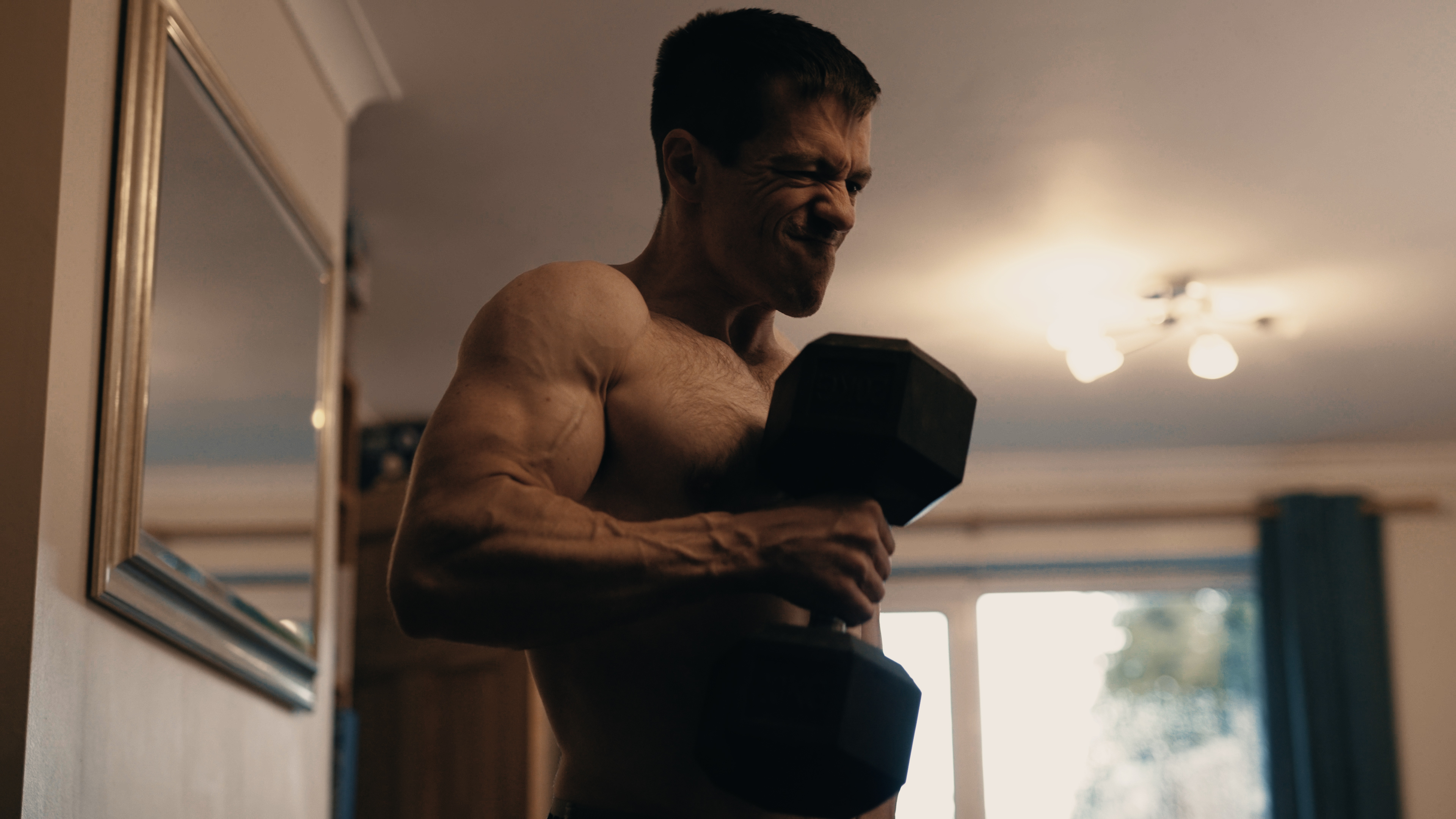
Our view of muscle is, very often, narrow-sighted. We think of muscle as what we use in order to move our joints. We think of the hip abductors, for example, as being muscles we use to abduct the leg – to move it sideways, away from the centreline.
But, in fact, this is just one small part of what muscle is for. Maybe it’s not even the main thing it’s for!
You could argue that the far more critical role of the hip abductors is to prevent hip adduction. That is, to prevent the legs from being pulled together by the adductors. To prevent movement, not to cause it.
This is what those muscles are “doing” 90% of the day, at least!
A certain amount of tension exists in the abductors. A certain amount of tension exists in the adductors. And these work in combination to keep the legs in place.
This process is ongoing all the time. It becomes even more important as we walk and run: to help keep our legs straight and our knees stacked below our hips.
SUPERFUNCTIONAL 3: SUPERMOVER - SPRING SALE!
Supermover is a program that builds an athletic physique and functional performance with short, accessible, & fun home workouts.
GET SUPERMOVER HERE!
This occurs throughout the body at all times. Different muscles have different resting lengths and resting tone and this contributes to various forces on the joints as we sit, walk, and stand. This is what results in our posture.
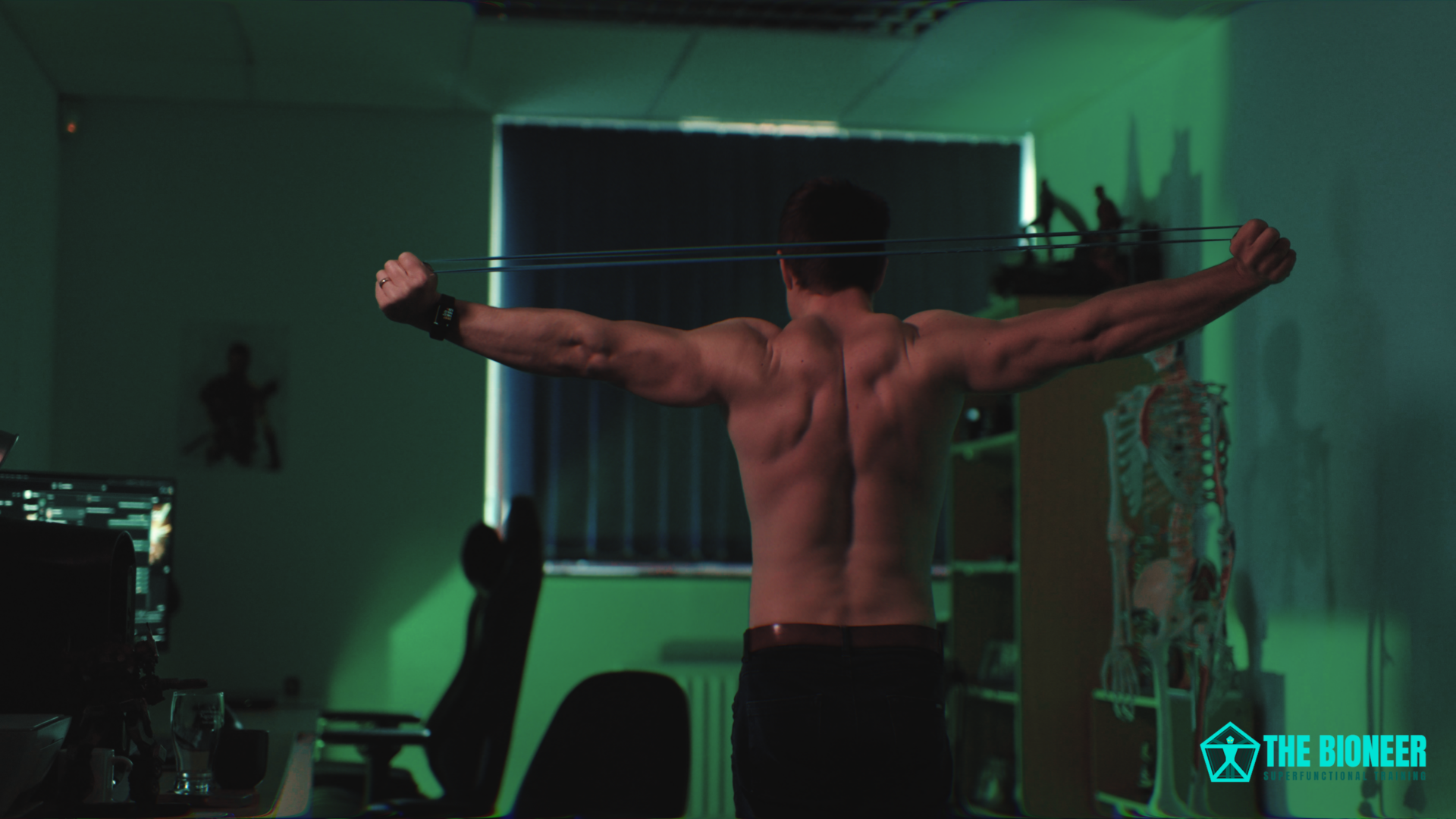
When that balance is thrown off, this is what creates what we might think of as a “poor” posture. In other words, some of the muscles in your system have “learned” to rest at the wrong length or the wrong amount of tension. And, as such, we become misaligned.
This is a simplification, but it’s also something that we need to unpack. Because poor posture will not only increase your risk of injury and pain: it can negatively impact everything from the way you breath, to your digestive system, to your confidence and appearance.
How We Learn Posture and Why It’s a Problem
So, how does this happen?
Simple: because the body adapts to the demands placed on it. This means that hours of long sitting can actually remodel the body. We see this in common issues such as kyphosis (hunched shoulders), pelvic tilt, weakened glutes, and short, tight hip flexors.
Sitting at the desk and typing with the arms stretched forward and neck pitched downward, means that the pecs and other muscles spend huge amounts of time in a shortened position. Eventually, this shortened position becomes the resting state. Now, even when you mean to stand straight, you are still hunched over.
In this situation your muscles and joints are still perfectly healthy. The problem is the nervous system.
Here’s another, more personal, example: many of you will know that I’ve suffered with back pain, historically. This is caused, I think, at least in part, by a sacroiliac joint fixation. That is to say that my sacroiliac joint has become stiff – shorter on one side – and this can place pressure on the sciatic nerve.
One possible explanation is my tendency to sit with one leg crossed – specifically my left leg crossed – underneath the other. I used to be a freelance copyrighter and would sit in coffee shops for hours typing literally tens of thousands of words in a single day. The coffee shop chairs got uncomfortable quickly, so sitting on my own leg helped to alleviate this. Over time, this may have caused an imbalance.
And that movement pattern is so ingrained in both my motor cortex AND my muscle tissue, that I have to constantly remind myself not sit like that any time I now go to sit down.
This is a perfect example of how poor posture can become a problem. According to some research, the link between posture and pain isn’t quite as clear cut as we might imagine. But does that mean it’s “okay” to sit however you want?
Well, crossing my leg over might not directly cause pain and discomfort but it almost certainly contributed to my current back pain. Similar issues can arise if you always have your arms extended in front of yourself, or your neck craned forward. It might be find for the time being but it can lead to injury, a pinched nerve, or muscle spasms – which happen when the body becomes overprotective of a certain joint in response to a perceived weakness or imbalance.
Imbalances can also impair performance as we aren’t able to express power to our natural potential, or move through a full range of motion.
A hunched posture also looks bad whether sitting or standing, making you appear shorter and less confident. This can have a knock-on effect on your mental state and how others perceived you.
The hunched position also makes it difficult to breathe deeply as the lungs are chronically compressed. The nervous system, circulatory system, and even digestive system are also compromised in this position. The nervous system, in particular, responds to the shortened breaths by putting you in a more sympathetic state – in other words it slightly elevates your stress levels throughout the day.
In case it wasn’t obvious, I find it very irritating when fitness influencers who only care about building massive muscles say posture doesn’t matter.
It absolutely matters.
How “Poor” Posture Transforms the Body
But what is actually happening in the body when you develop an undesirable posture. If you are still able to get out of that hunched position, what has changed that’s so bad? What is there to “reverse”?
There are a few things to consider, here. One is the difference between muscle stiffness and lack of mobility. Stiffness refers to this resting length and resting tone. This can be altered both acutely and chronically. But stretching such that you are able to touch your toes won’t necessarily result in an ideal posture at rest. Your body might still default to that resting position.
So, what is physically changing that results in the new posture? As you may have figured out by now, this is due to changes in the nervous system. Overtime, a new posture becomes habitual and the new neural pathways may become so ingrained that it is now challenging to stray from them at all.
I have seen some videos online that attempt to “debunk” posture advice. They claim that everyone has a different posture and that seeing as we’re perfectly able to sit up straight once told, we’re absolutely fine.
This is missing the point that the posture is a learned behavior.
Just because you CAN still sit up straight, that doesn’t mean you WILL.
And poor posture should be unlearned.
Moreover, though, there is also physical shortening of muscle tissue occurring here. Your pecs and hip flexors spend so long in this short position that it can reduce sarcomeres in series. That is to say that there are fewer contractile proteins arranged end-to-end within the muscle fibre.
Time spent in the shortened position provides a signal via intracellular signalling processes (mechanotransduction) resulting in altered gene expression and the resulting shorter muscle fibres. Over time, this shortening can become pronounced enough to be visible to the naked eye.
Again: this is not to say you won’t be able to access your full range of motion. But it can change the muscle’s default resting state: it’s optimal length. That means altered posture.
Depressing to think that our production-focussed society has literally remodelled our bodies to become more efficient work machines – and less efficient for life and self-expression.
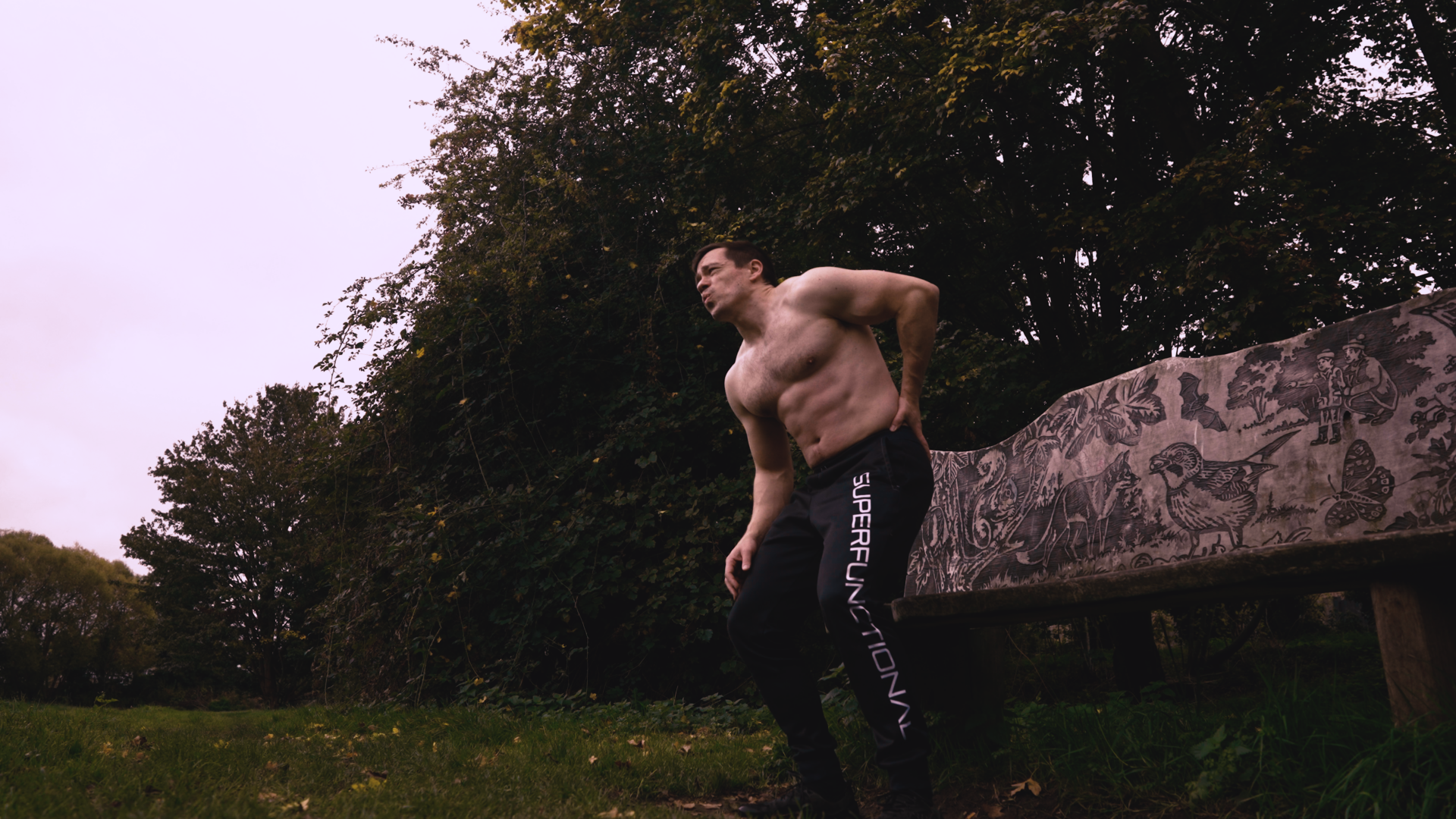
And this is how to really think about it. You don’t have a “bad” or a “wrong” posture. Rather, your posture has adapted to the situation. It has become optimal for sitting. Problem is that this posture is particularly unhelpful for breathing, longevity, fluid movement, and avoidance of injury down the road.
“There is no “wrong” posture – only the wrong posture for the context.“
Finally, these static postures can also cause changes in the fascia. Fascia is a tissue that surrounds the whole body like a clingfilm wrap and even surrounds the muscles and organs – even protrudes into the muscles. Fascia contains its own proprioceptors and motor units, meaning it can sense tension and produce force – it’s not just an inert stuff. It contributes to the tensegrity – full body tension – that keeps everything where it should be. Thanks to fascia, tension in one part of the body can signal an entirely different muscle to contract through myofascial force transition. It is overly simplistic to think of the body as a series of hinges and more appropriate to think of it as a giant web.
Fascia, like muscle, responds to demand and alters its shape in response to specific strength and pressure signals. Fibroblast cells will then lay down the collagen and collagenase as needed to make these changes.
This is also one reason why issues or tightness in one part of the body can result in problems elsewhere (other factors being the kinetic chain and compensatory movement patterns). We see this in the fact that relaxing the plantar fascia (on the bottom of the foot) can improve whole body mobility.
So… How Do We “Fix” Posture?
Keep in mind that we sit for up to eight hours a day at work and more when we get home. If you think that ten minutes of stretching is going to be enough to counter that HUGE stimulus, you have another thing coming. You can’t overcome a habit of biting your nails by not biting your nails for ten minutes a day.
That’s not to say that strengthening antagonist muscles and stretching those that have become shortened isn’t a useful practice. But this should be a strong enough stimulus to have a real effect – a move like the swan pull is a good example. Here, you pull your body weight upwards by retracting the scapula. Treat this as you would a bodybuilding exercise to really feel the target muscles and stimulate hypertrophy.
This move is particularly effective because it teaches us to pull the shoulder blades back – to retract the scapula. This is how we should actually fix hunched shoulders; not by tilting the ribcage upwards to create the illusion of a better posture.
We re-teach the nervous system to control the shoulders. We develop improved proprioception. And then we remind ourselves throughout the day to actually engage that position.
(And this is just another example of why not every exercise needs to be optimised for muscle growth in order to be valuable.)
Contracting and releasing the muscles can help to provide some temporary relief from stiff muscles. Both the targeted muscle and the antagonistic (opposite) muscle will relax immediately following this contraction thanks to autogenic and reciprocal inhibition. In short, when you contract one muscle forcefully, this causes the opposite muscles to relax, so as to allow for unrestricted movement. Likewise, this also causes the target muscle to relax when it is subsequently released.
This is one reason that stretching the arms out and/or yawning are so effective – this is called a “pandiculation” and is also what an animal will do when getting up from a long period of sitting. We can actually use this to then reach into a deeper stretch – as we see with Muscle Energy Techniques and PNF stretching, for example. Overcoming isometrics can also be used in tandem with stretching, for this reason.
There’s one more interesting option I’d like to explore, however. That is to utilise eccentric training of the shortened muscles. Eccentric training means training that focusses on the elongating of the muscle under resistance. For example, if you were to dumbbell curl a weight up quickly or with help and then slowly lower it in a controlled manner over the course of several seconds or longer, that would be eccentric training. It turns out that this kind of training can actually increase sarcomeres in series (whereas concentric training – shortening – seems to favour sarcomeres in parallel). In theory, this could help to undo some of the shortening seen as a result of training. For example, very slow eccentrics during push ups or flys could help to re-lengthen the muscle. Flys might work even better as there is an element of a weighted stretch involved. While weighted stretching has not been definitively shown to increase sarcomeres in series, as eccentric training has, it’s nevertheless a good way to get more than one benefit in one.
I similarly haven’t been able to find any studies looking directly at the use of eccentrics to address posture. This is purely speculation, but I think it’s very much worth exploring. I did find a study that showed how fencers could use eccentric training to increase their lunge length (study).
Keep Moving
But again, all of this will still only take you so far due to the sheer volume of sitting you’ve likely accumulated over your lifetime.
We also need to combine this training with other strategies – taking regular breaks from sitting, for example. That means getting up to do other things and trying to move around as much as possible. Set yourself a timer and create opportunities to move around your environment.
A common refrain from physiotherapists is that “your best posture is your next posture.” That is to say, that there is no perfect posture. The problem isn’t hunching per say but rather the amount of hunching we do and the duration. Stressing over maintaining the perfect position at all times is not particularly productive.
Sitting isn’t problematic in itself. Sitting for 8 hours+ a day, every single day, and doing very little else… now that’s VERY problematic.
“Sitting isn’t problematic in itself. Sitting for 8 hours+ a day, every single day, and doing very little else… now that’s VERY problematic.”
A good option, then, is to try breaking your day up by task.
Answering emails? Then why not place your laptop on the floor, lie on your front, and rest on your elbows as you type. This will put the spine into extension and, depending on the position of the laptop, allow you to draw the elbows back more.
Spending periods typing from a standing position is also a good idea. A standing desk can help with this, or you can stand and walk around while on the phone.
Standing all day can create its own issues. Even if the screen is perfectly neutral (keeping a joint perfectly neutral for hours isn’t great either!).
You can also work posture practice into other activities. If you meditate regularly, why not make an effort to do so with the scapula in a retracted position and neck gently lifted?
Try incorporating multiple, lengthy, static holds. Ido Portal recommends that everyone can benefit from seven minutes of hanging from a bar daily, for example. This is to be done cumulatively, not in one go.
And look for other aspects of your life that might be harming your posture. I identified my tendency to cross one leg as a problem. How about if you drive long distances, regularly? Or have a job that forces you into an awkward position?
Or look at how few grown men and women can get into a deep squat with their heels flat on the ground. This is partly due to the poor ankle mobility and constantly extended toes that are a result of wearing shoes with a heel and soft sole. Take a look at your own feet right now – if you see a ridge where your toes point slightly upwards compared to the rest of your foot, that’s thanks to the years of poor posture they’ve endured in shoes. This makes it much harder to then push through the ground to create force when running.
Finally, it’s also worth noting the big impact that mental state can have on posture. I’m not only talking about the way we slouch when we’re feeling sheepish, or otherwise alter our body language in accordance with our moods.
I’m also talking about the way that simply being stressed causes the body to become tense, further shortening the muscles and creating potential pain and discomfort. Exacerbating the issues caused by long periods spent in awkward positions.
One of the very best things you can do to improve your posture immediately then is to just relax.
Go on, try it.