
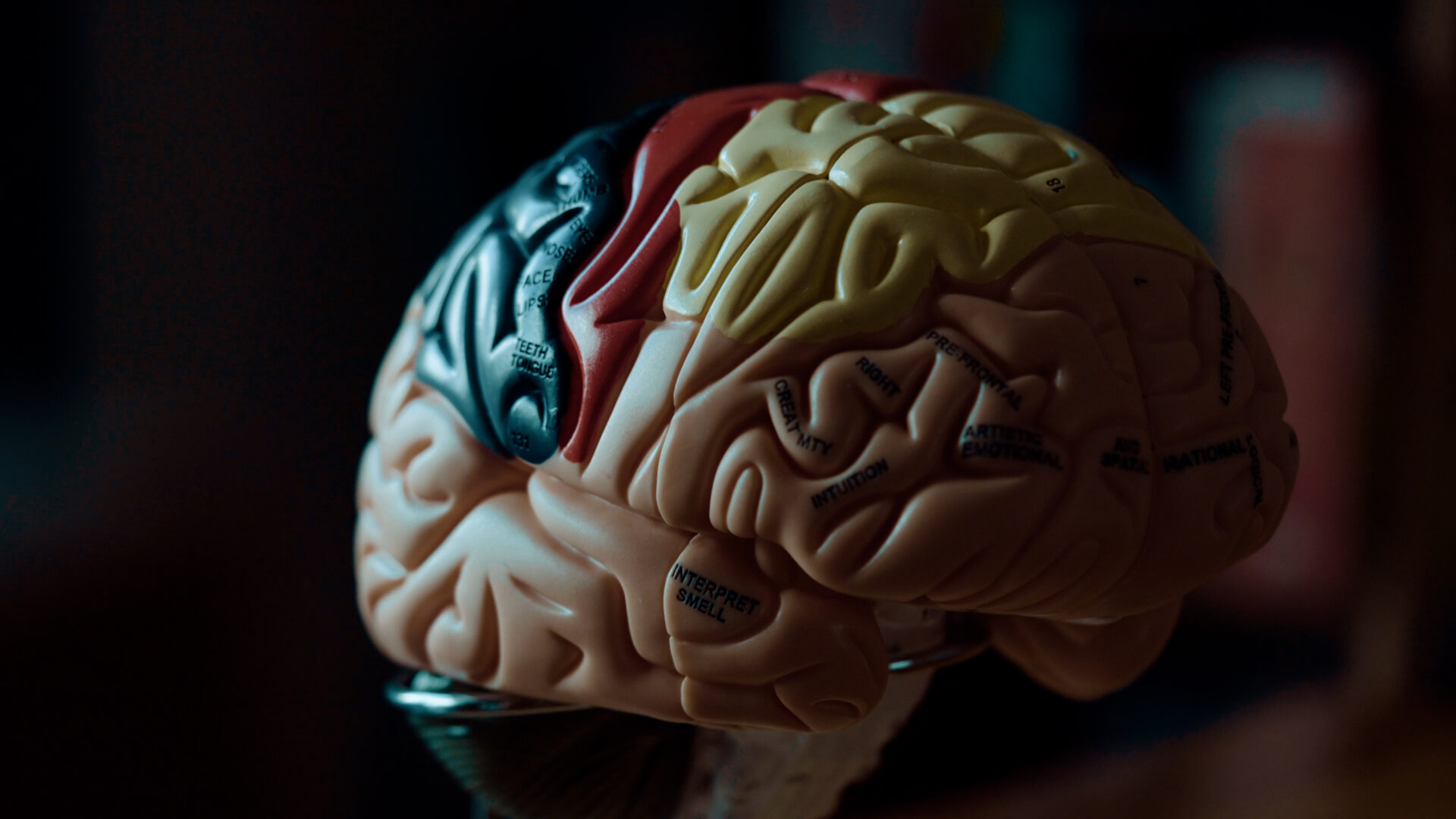
The human brain is weird and profoundly messy. It works in strange ways and often resists our attempts to organise its jumbled data in a logical manner. This is why so many memory techniques and revision strategies fall short.
Rather than fighting this tendency, we would do well to lean into it. It’s how I’ve managed to remember the authors of a random psychology study for 20 years… by picturing a mint leaf.
Read on and I’ll share the method that helped me do this, so that you can better work with your brain to store and navigate huge amounts of information.
The Method
I call the method “The Sheet Technique.”
The idea is simple: condense all the information you need on a single subject to a single page and then carry that page with you as a prompt for future learning. It works for students studying for exams, of course, but it can also be a useful tool for anyone looking to add to their own knowledge. Want to learn to code? Memorise the muscles of the human body? Recite cool quotes in conversation?
The sheet technique has you covered.
SUPERFUNCTIONAL 3: SUPERMOVER - SPRING SALE!
Supermover is a program that builds an athletic physique and functional performance with short, accessible, & fun home workouts.
GET SUPERMOVER HERE!
This is not some new, revolutionary system. Rather, it draws on several pre-existing methods that are time-tested (summarisation, mnemonics, spaced repetition). The way it’s implemented is just a variation that has worked particularly well for me. And understanding why can offer some unique and interesting insights into the workings of the brain.
The first challenge is condensing all the information you need to a single page. Back when I was studying for Uni exams, I would have huge binders of notes for each subject: cognitive psychology, neuroscience, developmental psychology, etc. To begin with, I would try to reduce these binders to maybe three pages. This process would mean cutting out everything that was easy to remember, everything that was superfluous or that would follow logically from other facts, and anything that could be summarised in fewer words. It might also mean using visual cues (a little sketch of a neuron, for example), bullet lists, and mnemonics.
The mnemonics are particularly important. These are acronyms, rhymes, or random associations. Sometimes these can be completely random cues that only make sense to you. That mint example worked because I remembered that a psychologists called “McClintock” did a study about pheromones by recalling an advert in a magazine where someone had a mint leaf under their nose. I guess “McClintock” sounded like “Mint” but something about that image has always stuck in my mind.
These mnemonics are effectively used as a form of data compression – like making a zip file on your computer so as to fit more files on the hard drive. But it means that something as small as a tiny sketch of a mint leaf can be used to recall an entire study and the name of its author. And I would have chosen that study specifically because I knew I could use it to back up various points I might need to make in my essays.
This does mean that these sheets are purely personal and not useful for anyone else. It becomes almost like a legend for navigating your own mind. This is encoding-specificity in action: the mnemonic works here because the learner wired that specific connection. And, in this case, the multi-modal nature of the cue also helps – it’s both visual and semantic. And it even engages other senses as I always felt like I could feel the leaf on my own face, looking at that image.
Over time, the three-or-so sheets I created would become two sheets. And then one.
The very process of condensing the information as much as possible, by making multiple passes over it and engaging with what was important… that helped to commit the information to memory in a highly efficient and resilient manner.
Spaced Learning/Spaced Repetition
So, the process of making the sheet in the first place is part of what makes this system so effective.
But subsequently owning the sheet is also extremely valuable. Because now you have a single page that you can carry with you anywhere for quick and easy reference.
In this way, the system now becomes similar to a cue sheet. But the real advantage is that by having all that information reduced to a single page, you completely remove the friction normally involved in revising. You can keep the sheet on your bedside table. You can look at it while you’re boiling the kettle. You can take it on a long train journey. You can even make copies and stick them all around your house.
This allows for something called spaced-learning (AKA spaced repetition), which I‘ve written about on this site before. Spaced learning refers to the observation that breaking study sessions into multiple smaller chunks, spaced throughout the day, actually results in more effective learning. This is because each new learning sessions acts like a “fresh” attempt at recall, testing your ability to retrieve information from cold and helping to create stronger connections to that stored data.
But it’s not just the convenience that makes these sheets inherently useful. What you’re left with is usually an incomprehensible scrawl of tiny writing, doodles, and bullet points. But this uniqueness makes it even better for learning as – if other retrieval methods fail you – you can actually use your visual memory to try and recall what was written in the top left corner. Drawings often stick better in the mind. You can use arrows and lines to connect various ideas. You can bolden the things that don’t want to commit to memory as easily.
It’s messy and incoherent… but that’s far closer to how that information is probably stored in your own brain!
As someone who is particularly scatter-brained, this method certainly worked extremely well for me.
But, like I say, it’s really just a mish-mash of pre-existing strategies. Give it a go but don’t be shy: tweak it to suit your specific learning style and goals. Because, as we’ve seen, every brain is uniquely messy!


Hello, I love your content.
I did something quite similar to this in high school where I would make cheat notes that I could hide around my body and arranged them by subject – I might have chemical formulas hidden on my left arm, for example. When came time for the actual test, I’d leave the notes at home. I could look at my left forearm and remember the chemical formulas without the notes being there. Later on I learned about the roman room and realized I was doing something similar.
Great content as always, but the real questions is…… will this cause hypertrophy? ;p
– Shane