Short 4-10 minute workouts might just be the missing switch your body needs to start improving your fitness.
I’m not claiming that these micro-cardio sessions will give you the body of a Greek god. This is not a “secret hack” for a ripped six pack.
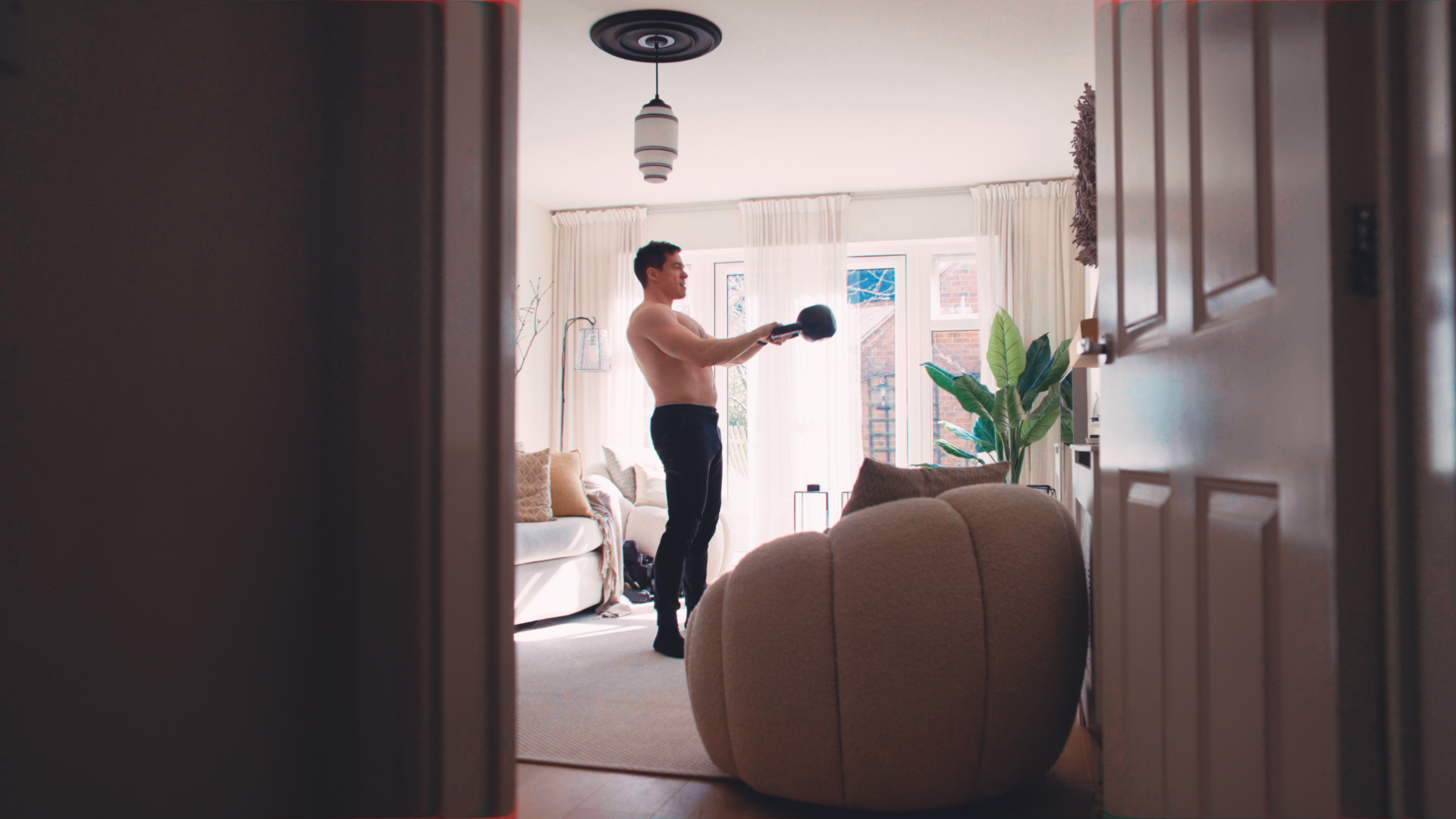
But what it could be, is a return to a more natural way of integrating movement into our routines – that helps to improve our circulation, our energy levels, and mindset, and our bodily rhythms – so that everything else falls into place.
I’m going to refer to it as “micro-cardio.” And I’ve personally felt incredible results from this approach.
It WILL indirectly transform your physique. But, more importantly, it will also give you so much more energy and motivation in everything else you do. And it’s obvious, when you really think about it.
The Goal
Many people look at cardio as being detrimental to muscle gains and somewhat useful for weight loss. Those that aren’t in the habit of demonising cardio will often act like it’s only useful if you’re a dripping pile of sweat at the end.
SUPERFUNCTIONAL 3: SUPERMOVER - SPRING SALE!
Supermover is a program that builds an athletic physique and functional performance with short, accessible, & fun home workouts.
GET SUPERMOVER HERE!
But cardio has countless other benefits. And perhaps most important of all is what it can do for your energy levels, in both the short term AND the long term.
If you’re someone who comes home from work and collapses on the couch – who intends to workout but finds themselves making excuses because they just feel too tired… you might need this.
Because doing just 5fiveminutes of light cardio is enough to turn your evening around entirely. This could be five minutes of jump rope in the garden, five minutes of shadow boxing, or even just bouncing on the spot gently.
Very often, what we think of as being very tired or exhausted, even, is actually just lethargy. We’re tired because we’ve been inactive and that has its own kind of momentum. This may or may not coincide with reduced mood and motivation.
Five minutes of jump rope will change that instantly by increasing cerebral blood flow – getting blood and oxygen to your brain and thereby increasing focus and alertness. It will also raise your core temperature – and alertness is known to track very closely to temperature.
It will put you in a slightly more sympathetic state – meaning you’ll increase the production of excitatory neurotransmitters like norepinephrine and dopamine. This, alongside feel-good neurotransmitters like serotonin. You’ll also wake up the muscles and joints, eradicating somatosensory amnesia and lubricating your joints so you don’t feel stiff and slow.
You’ll be in a slightly more “fight or flight” state but, crucially, you won’t overshoot it. Just five minutes of gentle cardio will ensure you don’t end up more exhausted than you started.
Likewise, these small doses are more palatable. And even if you’re very tired, you should be able to bring yourself to do very light jumprope or to throw a few punches for five minutes. The barrier is low but following that you’ll have far more energy to direct towards exercising fully, later. Or tidying the house. Or writing that novel. Or calling your Mum. All the stuff you usually put off.
I highly recommend doing this whenever you feel that slump in energy and motivation. In the evening when you’re feeling tired, or at the post-lunch slump that occurs around 4pm and is more a result of our circadian rhythms than actually eating.
THIS change – activity throughout the day – is what has made me more energetic and productive as a parent on a constant sleep deficit than I EVER was when I was young and carefree.
Fitting it In
Oh, and a key added benefit is that you don’t sweat too much. If you do 5 minutes of light jump rope outside or with your top off, you can do this without having to get changed or shower. All this can massively improve adherence.
And there are lots of ways you can fit this kind of training into your lifestyle. Unlike a 40 minute run you don’t need to leave the house for an hour or buy a treadmill.
You can just jog on the spot for example, or do skater hops. You can also dance for 5 minutes or do shadow boxing – something that’s also great for mobility and proprioception.
Kettlebell wings are a brilliant option. And even high-rep calisthenics can work this way – two sets of 100 push ups will ramp the heart rate right up PLUS you’re getting muscle building benefits, too.
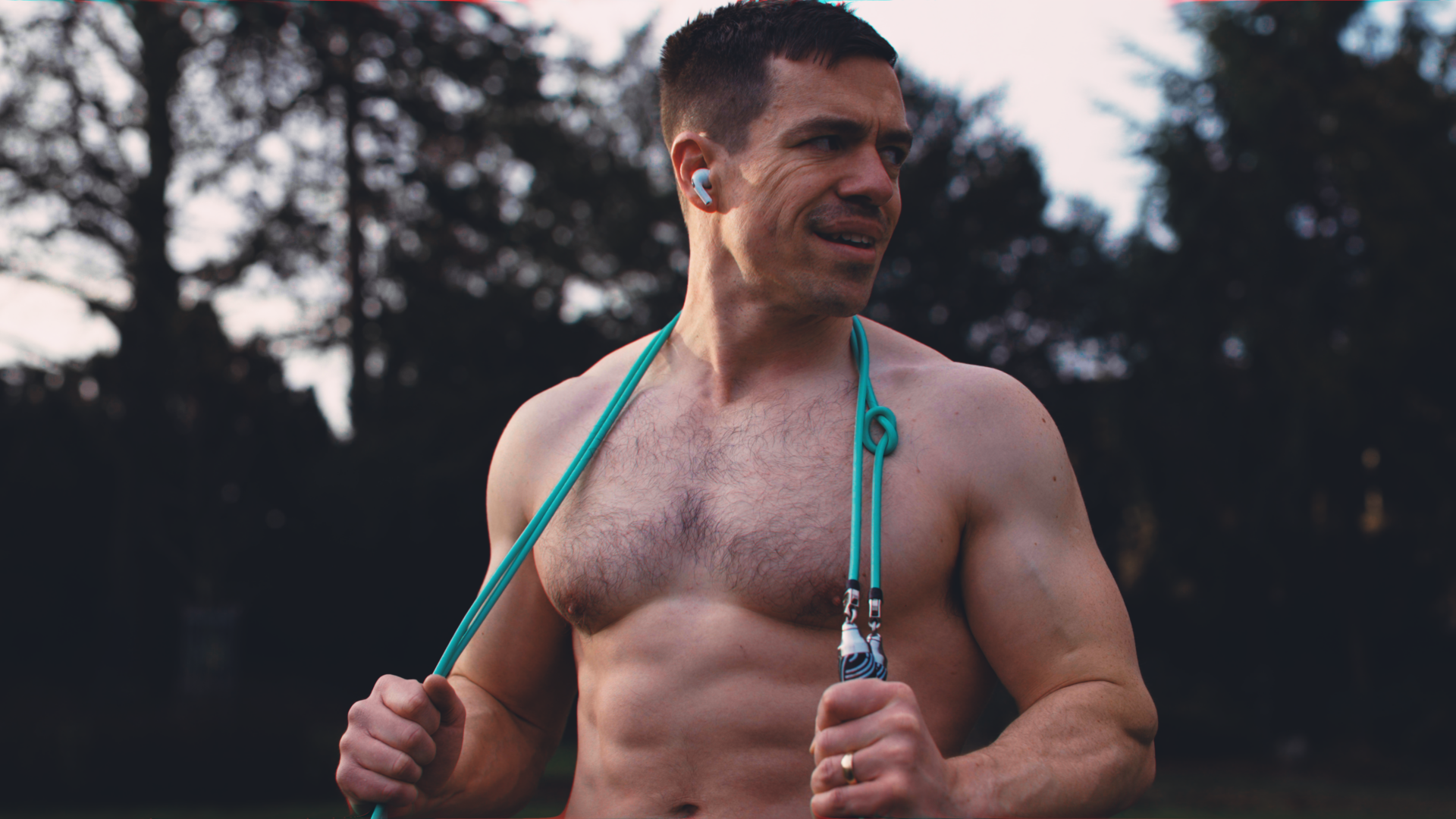
But the method I’m showcasing here and the one I recommend perhaps most highly is jump rope. Jump rope is easy for anyone, it’s fun, it can be done in your front garden, and it offers other benefits like skill development, timing, ankle hystereses and more.
Any form of cardio can do the job, though, and you can even mix it up. One of the simplest things I do is to jog mostly anywhere I have to walk!
Will This Make You Ripped?
Will this make you ripped? Not directly. I don’t want to make any wild claims here. You’ll use around 40 calories per micro session and if you manage to do three of them in a day, that’s 120 calories total. Over the course of a week, that adds up to 840 calories – not a lot but not inconsequential.
EPOC – or Post Exercise Oxygen Consumption – will be higher than doing a single, longer cardio session. This is the extra calories you use after you finish exercising while your heart rate is still elevated. Doing three sessions instead of one means that this happens three times, rather than once. Now, you’re likely to be using extra calories in single digits per workout. But I think it still points to why this stuff is so beneficial.
Because each time you’ll also be increasing insulin sensitivity. You’ll be increasing muscle glucose uptake. If there’s a strength element, you’ll be slightly stimulating protein synthesis, too. Each time.
And again, we’re keeping it short enough to avoid significant glycogen depletion, cortisol elevation, or fatigue that might interfere with other workouts, later on.
This has the significant benefit of guarding against adaptive thermogenesis or reduced non-exercise active thermogenesis (NEAT). You see, some exercise ends up contributing less to weight loss than it should because the body down regulates other activity. Whether that’s conscious (you lie around more), habitual (you stop bobbing your leg around as much and move more slowly), or physiological (you reduce activity through hormonal changes).
These short sessions “wake up” the body after long bouts of sitting. If you’re inactive for large periods of the day, you’re going to struggle to see effects from just one hour of compartmentalised exercise.
This is the missing piece of the puzzle for many people struggling with body recomposition. When I did personal training, I specifically remember coaching someone who was restricting calories from her diet and getting lots of exercise but just wasn’t losing weight. Eventually, we realised that the issue was that she was entirely inactive the rest of the day: she caught the train from just outside her door and got dropped right outside her office where she would sit for hours.
Diet and working out can only do so much to counteract an entirely sedentary lifestyle. More important is how active we are the rest of the time – when walking, taking the stairs, playing with kids, dancing around the kitchen. This is the aforementioned NEAT – all the stuff you do throughout the day that isn’t explicitly exercise but that nevertheless is active.
The great thing about micro cardio is that it emulates a more active lifestyle. It’s more natural to be moving a little throughout the day than to barely move all day apart from one extremely intense bout.
This makes it actually useful for body recomposition. Not enough to be completely transformative on its own but a wonderful tool that will augment diet and exercise. And it could well be the catalyst that gives you the energy and drive to achieve your other fitness goals.
Amazing Health Benefits
And it’s through these same mechanisms that we see amazing long-term benefits from short bouts of cardio, too.
I actually find it to be a shocking indictment of modern life that we call this kind of movement “non-exercise.” That points to the fact that many of us only move if we’re explicitly exercising. That sucks, guys.
Again, our body is meant to be moving sporadically throughout the day. And by having these short bouts of exercise we develop a great kind of “cardio readiness.” We train ourselves, through practice, to respond better to a sudden increase in activity and to recover better from that training.
Heart rate kinetics refers to how quickly the heart rate rises when we start exercising and how quickly it falls after. Developing this is associated with better cardiovascular efficiency and a lower perceived exertion during tasks. This could have positive knock-on effects for heart rate variability.
You may see improved vascular responsiveness and endothelial function. Increased vascularisation.
You could also see improved VO2 kinetics – the ability to rapidly increase oxygen uptake to meet demand.
You’re not going to massive improve your VO2 max or be able to run marathons but I hope I’ve demonstrated that this isn’t the only benefit of cardio.
And this more precisely mimics the kinds of tasks we’re faced with every day. Short bouts of activity whether it’s running for the bus, playing with the kids, fixing the fence, or carrying shopping.
It even echos the way we move in team based sports – running for short periods before hanging back. And the way we
It’s your ability to ramp your system up and calm it back down that will make you more focussed and energised during these sorts of tasks. And that’s exactly what you’re
All that and better health that may even translate to more longevity.
So, yeah, stop worrying about how cardio “hampers muscle gain” or how it reduces fat. Stop thinking about how it translates to endurance events or just losing fat. Think about how it improves your health and energy levels and how this makes you more energised and enthusiastic for every other task you perform.
Short duration cardio performed five times, three times, or even once a day can make a noticeable difference in this regard. So, keep moving throughout the day. And ecognise the value of even small amounts of cardio.
Like S-Club 7 said:
“Don’t stop moving. Find your own way to it.”
Deep stuff.