
Caffeine is undoubtedly the most popular performance enhancing drug in the world. Many of us use it every single day to feel more alert, to boost our focus and memory, and to get more work done.
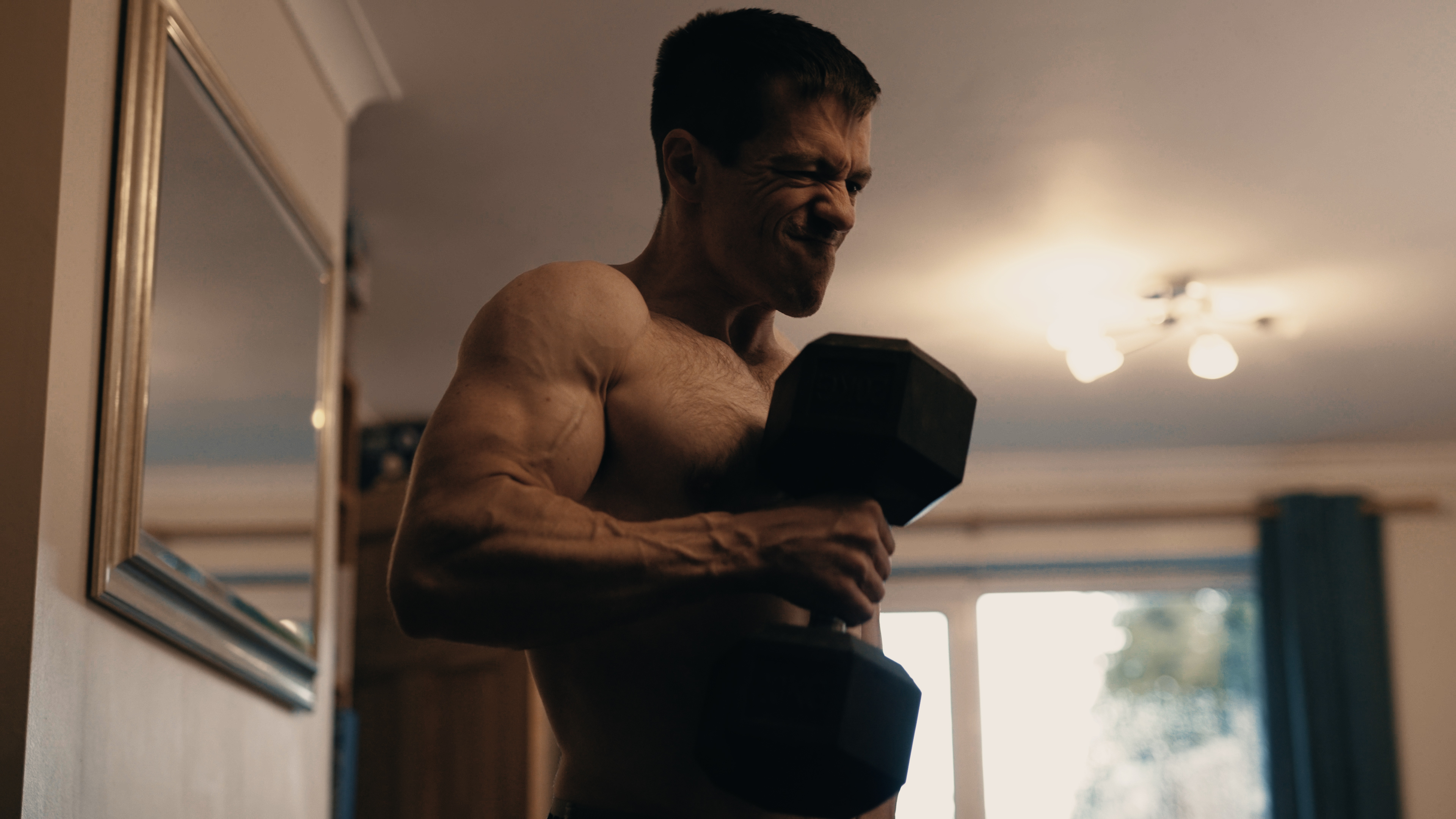
Others use it in order to boost their performance at the gym – using it to gain increased strength, motivation, pain tolerance, and more. A pre workout full of caffeine can be the difference between a tired workout with sluggish performance, and a great workout that leaves us feeling amazing.

But is caffeine really the win with no downsides that we believe it is? Or could it actually be harming our performance in some more subtle ways? Depending on your neurotypical and the type of athlete you are, taking extra caffeine may well be the worst thing you could do for your overall performance.
We should start by looking at precisely how caffeine affects us and what it does.
Why Caffeine Feels Like Magic
Throughout the day, a neurotransmitter called adenosine builds up in the brain. This neurotransmitter causes us to feel groggy and tired by inhibiting the activity of brain cells. This is one of the factors that contributes to the “weight of sleep” that makes us feel as though we need to hit the hay.
Caffeine mimics this adenosine molecule and is so able to take its place – preventing adenosine from having its usual effect in the brain. This is how caffeine helps us top feel more awake and alert.
SUPERFUNCTIONAL 3: SUPERMOVER - SPRING SALE!
Supermover is a program that builds an athletic physique and functional performance with short, accessible, & fun home workouts.
GET SUPERMOVER HERE!
But something important to understand about the brain is that nothing happens in isolation. You do not “only” reduce adenosine activity – you also increase other excitatory neurotransmitters like glutamate, cortisol, and adrenaline. Specifically, by preventing adenosine from binding and thereby increasing neuronal activity, caffeine has the knock on effect of causing other excitatory neurotransmitters to get released.
It’s a little bit nuanced than simply saying “caffeine increases dopamine.” In truth, caffeine increases brain activity which increases dopamine in specific brain regions like the striatum. But suffice to say that these neurotransmitters make you feel more “alert” and switched on. And this can feasibly help you to perform better at work and even improve learning through enhanced long-term potentiation.
And this aids with gym performance, too. Because you’re now in a more sympathetic state – closer to “fight or flight” than rest or digest – you’ll find that it’s easier to recruit more motor units with a stronger neural drive. This is why caffeine supplementation prior to workouts can help you to increase maximal strength by around 2-5%.
Because sympathetic activation increases pain tolerance and heart rate, this also improves muscular endurance – such that you can perform more reps in a set.
Finally, if you’re feeling tired and low on motivation, you may find that caffeine can give you that extra push to get in the gym: thereby improving adherence and long-term outcomes.
So… what’s not to like?
When Caffeine Doesn’t Help
So, if caffeine is so amazing, what’s the catch?
Well, essentially what I just described is “stress in a cup.” Fight or flight is stress. And while stress can be good as a motivating force (we call that “eustress”) it can also be very negative.
When it comes to your physical performance, this can actually have negative connotations.
For example: while the increased muscle activation can be a positive thing, of course, this can also lead to increased stiffness, reduced fine motor control, slower relaxation times, and even tremors in some cases (study).
This isn’t a huge problem for something like a bench press. But it can be a problem for something like parkour, calisthenics, or gymnastics. In these scenarios, you might find that increased stiffness causes you to move without the desired “flow” or gracefulness. This is also a problem for movements requiring the double “pulse” of contraction and relaxation – such a throwing a punch.
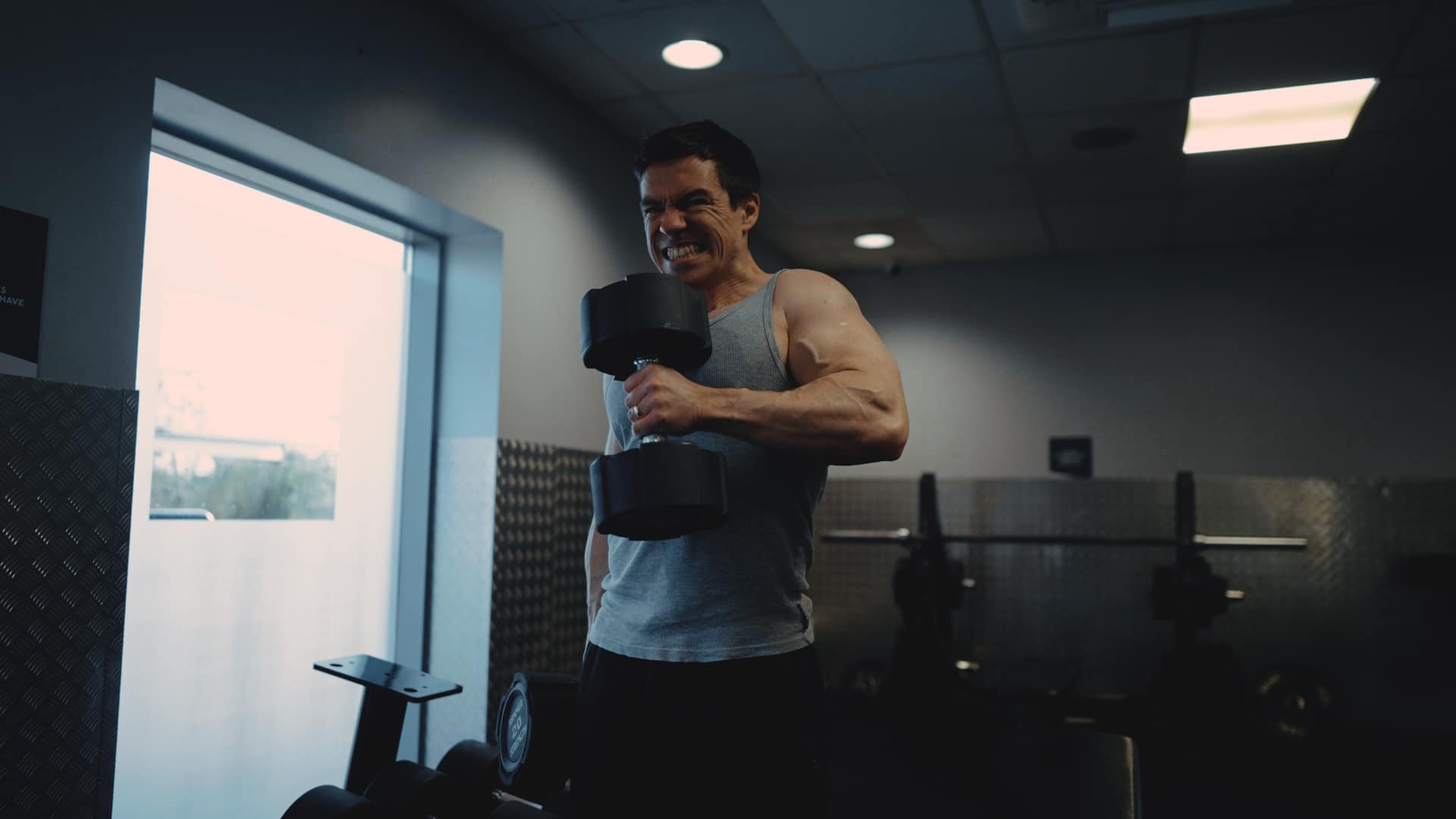
Where this increased arousal can become an issue for big lifts, is where it comes to the yips or jitters. Anyone who has ever gone for a big lift will know that this can be a surprisingly psychological endeavour. It’s very easy to get in your own head and choke as you worry about dropping the weight on yourself or blowing out a knee.
Caffeine can obviously make this worse. And this is only exacerbated in activities that do require a lot more focus. Did you know that being very stressed actually reduces activation of the prefrontal cortex? I’ve heard extreme stress described as a prefrontal lobotomy. It’s a little extreme to say that caffeine would have an equivalent effect… but it certainly wouldn’t help. And if you’re feeling nervous before an interview or a presentation – having a big jug of coffee could tip you over the edge and leave you grasping for what you had planned to say.
This has certainly happened to me.
So, I don’t recommend caffeine as a tool for getting through tests and interviews. I definitely don’t recommend it for parkour sessions and this is something that Liam Ellis actually made a great video about ages ago – I’ll link it in the description.
But, in reality, the pros probably outweigh the cons for powerlifting and bodybuilding – at least when it comes to your performance on specific lifts…
Always “On”?
Thing is, I take issues with the notion of using caffeine to get through a workout you don’t want to do. If you feel tired and sluggish and not capable of giving it 110% at the gym… here’s a crazy thought… maybe you should listen to that signal from your body?
Pain and tiredness shouldn’t be viewed as inconveniences: they are signals. If you choose to use a huge megadose of caffeine to mask over them and push through, it’s only logical to think you might increase injury risk.
It’s certainly logical to think you might be more likely to experience burnout by running your system at 110%.
And this is only further compounded if that caffeine then negatively impacts on your sleep – which of course it can do if consumed too late in the day.
If you can push through tiredness repeatedly without repercussion then maybe you’ll get stronger a little quicker. But it doesn’t strike me as being super-sustainable. And really… what’s the rush?
Another effect we see in a “fight or flight” state is tunnel vision. We find that our vision narrows and we lose awareness of the periphery. From an evolutionary perspective this serves to keep us focussed on the dangerous situation at hand and removes distractions.
But you don’t need me to tell you how this could be a bad thing in many athletic endeavours – where you in fact need to be aware of what’s going on around you.
How Caffeine Can Actually Harm Working Memory
This is further exacerbated by the fact that caffeine use may in fact negatively impact working memory. I’ve talked about working memory a lot; it’s essentially the little “notepad” our brain uses to store information temporarily while we work on it. We use this during calculations or when trying to remember a phone number while looking for a pen.
Working memory is closely related to focus, as we need to focus internally to keep the information present. This is why, in lab settings, caffeine may sometimes be observed to aid with working memory performance. And it’s why it might well be useful for certain types of test.
However, working memory about much more than that outside of the lab. We are constantly holding on to multiple forms of mental constructs and updating them in real time. In conversation, we use working memory to remember what someone has said to us and to continually update that information while we also plan what we’re going to say in return. And we use it to maintain a general map of our surroundings without having to constantly look at them. This information is fluid and needs constant updating.
In real-world settings we don’t have the luxury to sit still and maintain our image of the world around us. During sports we may need to do this while running, planning, and tracking a ball. If arousal narrows your focus too much, you may well lose the information you were trying to hold on to. Likewise, if we focus our attention internally with too much vigilance, we may miss vital information from our senses that should have been integrated.
To do this efficiently, we need the right amount of arousal – not too much and not too little.
This is likely why studies now show that caffeine can actually impair working memory function in specific circumstances and in some domains. It seems especially bad for spacial working memory, perhaps for the reasons I’ve discussed (study, study).
These effects may well be worse in some individuals than others. As someone who is very “wired” I find it doesn’t take much to feel overstimulated. To the point that if I have too much coffee, I can end up feeling floaty and detached from the world around me. “Stare-y.” I become a worse conversationalist and – I’m pretty sure – even a worse driver.
Turns out I’m not alone in this and it took me way too long to recognise the pattern.
But, of course, if you’re someone who is not as excitable, you may find that a little caffeine is just what you need to be brought up to baseline.
Caffeine VS Creativity
While we’re getting into the weeds of cognitive performance, we should also consider that high anxiety and excessive arousal are anathemas to creativity, at least according to the research and personal experience. We come up with more creative ideas when we allow the mind to wander and form new connections between disparate ideas. This can’t happen when we’re laser focussed.
This is so much the case that we actually see creativity improve when we: lie down, go for nature walks, even so much as look at a plant or the colour green; at least according to the studies, I’m not exaggerating!
Then there’s the fact that elevated dopamine in the thalamus (one potential, indirect outcome of caffeine consumption) can increase “signal filtering” and “network switching” (sound familiar?). Increasing dopamine in this area could thereby increase cognitive “rigidity” and the filtering out of potentially interesting ideas not deemed salient to the current situation.
This goes some way to explaining why caffeine may help to improve convergent thinking but may also impair divergent thinking (study).
So, taking your own “neurotype” into account, you might choose to use caffeine only for tasks that require a lot of focus and little creativity. Maybe inputting data into a spreadsheet.
But here’s the thing: increasing focus using caffeine means artificially shifting into a more aroused state. In some cases, this may hamper your ability to then “downshift” as the situation demands. Had you used mental discipline to direct your attention to the task – by reminding your system why it’s important – you would still be able to increase your attention and focus but then also “ramp down” that signal as needed. To relax on your break, to not get so upset at your boss’ nagging, or to have creative ideas where appropriate.
Use caffeine to achieve that same end and you might find it harder to flow in and out of that focussed, anxious state. That flow is what true cognitive performance is all about. It’s adaptability.
Optimal Cognitive Performance is Adaptability
Especially given that many tasks require a combination of seemingly opposite states and cognitive skills. Consider inventing a story for example – this is a task that requires you to think creatively while also holding all the characters, information, and world-building your mind, updating that information as you do so. It requires divergent thinking but also attention and vigilance. And while divergent thinking is useful for exploring crazy ideas, it’s convergent thinking that helps us to pick only the ideas that make sense in a narrative structure.
It’s just like the world of fitness where people insist of separating endurance and strength – like we can have one without the other. Like there are any kind of strict categories defining these labels. This is short-sighted as, broadly speaking, the body uses all systems, at all times.

Techniques can be learned that will allow you to increase focus and to relax as needed. Cognitive restructuring, meditation, stress inoculation training… And simply being more aware of your own mental state is a great first step.
Look: I’m not saying never use caffeine. That it has no place. I LOVE coffee, personally, and I often feel great after one cup in the morning. We’ve seen that it has a lot of benefits and there are more that we haven’t discussed (there’s a good amount of evidence that it’s nueroprotective!).
But it’s time to stop thinking of it as purely a “cognitive enhancer.” As ever, the brain – when functioning in a healthy manner – is balanced the way it is for a reason. Just like the body, true mastery comes from turning your focus inwards. Don’t look for shortcuts.
And unless you’re trying to smash your PR on the bench press… most people can steer clear of pre-workouts packed with stupid amounts of caffeine.

I am addicted to caffeine. I enjoy pre workouts and coffee and tea. They can hurt my stomach and keep me up at night.