
You don’t need me to tell you: getting injured during your training sucks.
Not only does it suck being in pain, it also sucks being out of action and unable to to continue your current training plan. This is especially frustrating in calisthenics when you’re working toward a skill.
And it happens to me all the time. Mainly because I don’t follow my own advice, I get over-excited, and I ignore the signs.
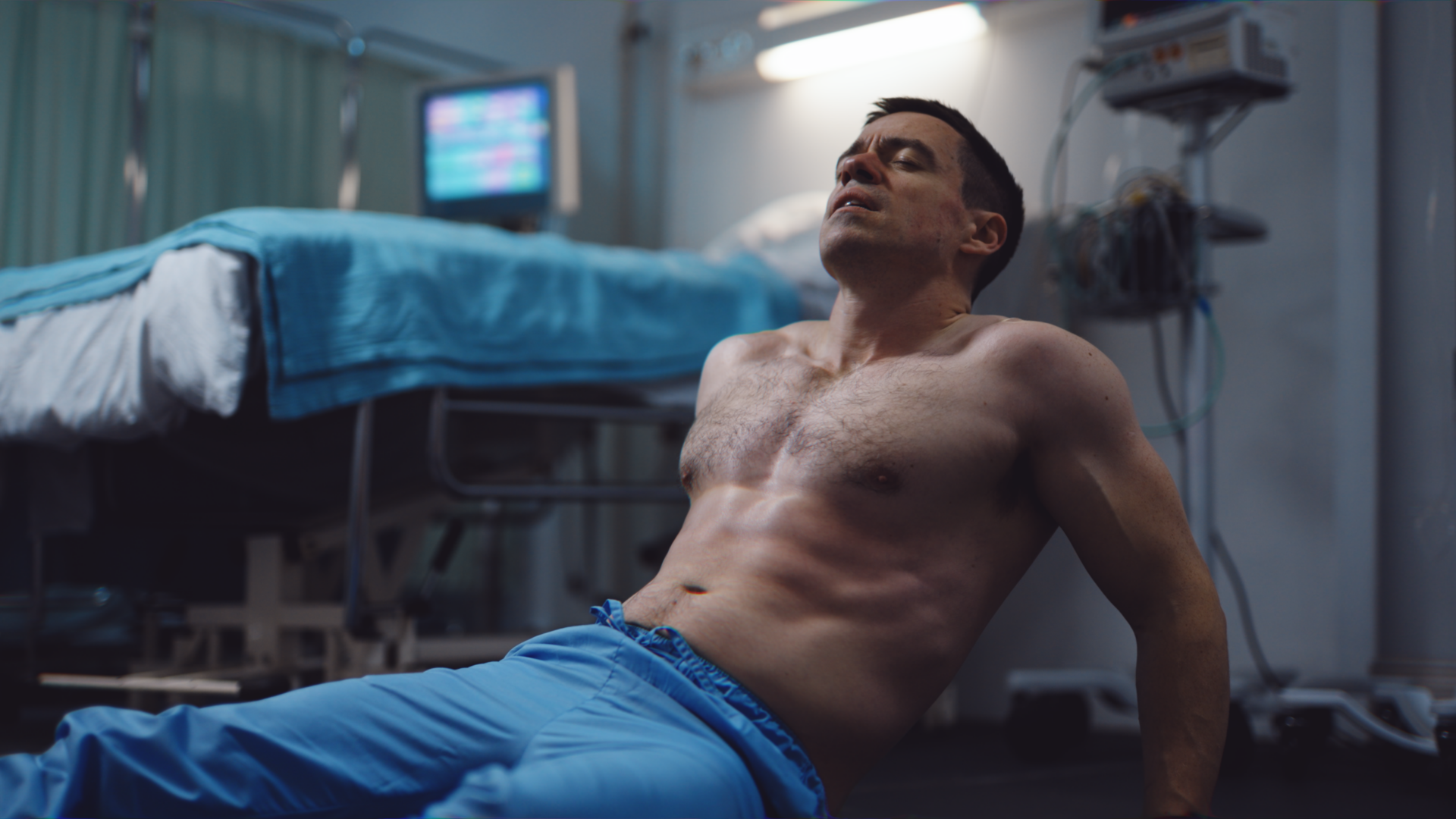
Thing is, though, while it’s annoying… I also don’t worry too much when it happens. I’ve had bad knees, bad backs, bad elbows, bad shoulders… you name it. And while some have been chronic, for the most part I know that I’m able to recover and get straight back into the action pretty reliably.
I have a system that I apply to any given injury that is extremely reliable for me and usually helps me come back stronger with minimal disruption.
I’m not saying this will work for you. But I’m sharing what works for me and explaining why it may work so that you can try adding it to your arsenal.
SUPERFUNCTIONAL 3: SUPERMOVER - SPRING SALE!
Supermover is a program that builds an athletic physique and functional performance with short, accessible, & fun home workouts.
GET SUPERMOVER HERE!
For Minor Injuries
Of course, there are different types of injury and it’s important to consider how these affect our strategy when it comes to rehab.
For minor injuries – such as your basic tendonopathy or light muscle strain, my strategy is simple:
Keep using the area, but don’t work through pain.
So, for example, if I am struggling with shoulder pain that hurts during dips, my solution is NOT to stop training shoulders. It’s just to stop training dips.
In practice, this might mean:
- Doing dips with a partial rep-range.
- Doing supported dips with my feet taking some of the weight
- Doing dips with slightly different hand positions (moving the dip bars or turning them inwards)
- Doing dips more slowly and carefully
- Doing push ups, instead of dips
- Push ups on my knees
You get the picture. The point is to try and perform the closest movement I can that doesn’t hurt. Then I do a LOT of reps but keep them very light.
In my experience, this helps to keep blood flowing to the area as much as possible, which in turn seems to accelerate recovery. Tendons are poorly vascularised so may benefit from this increased supply but we also know that mechanical stimulation aids with tissue remodelling. It also strengthens the surrounding areas (rather than letting them atrophy) and it gives me the confidence to start coming back as soon as possible. It also means that I don’t feel like I’m missing out massively in my workouts, as I’m still hitting all the areas I want to hit – just a little differently or a little less.
And honestly, this strategy alone works about 80% of the time and gets me back to full function in a few weeks to a couple of months.
The other piece of the puzzle is to train the opposite movement, both with mobility and with light resistance. A perfect example is how I like to use a pronated curl to overcome lateral epicondylitis caused by doing lots of supinated curls – where my wrist was in constant flexion.
For Chronic Aches and Pains
For chronic aches and pains, I use a very similar strategy but with some slight alterations.
An example is when I had what was described to me as patella maltracking, a while back. That’s serious knee pain that I would feel every time I walked down the stairs or downhill. That lasted about a year until I started doing something really simple:
Super high rep, low weight, seated leg extension on a resistance machine.
Again, crucially, I did not keep pushing through pain. I did this only at the level I was able to comfortably. But for lots and lots of reps.
This, again, got blood flowing to the area, mechanically stimulated the tissue etc. But it also did something else: it enforced healthy movement patterns by isolating the exact movement pattern I wanted – it ensured that my quads were working to extend the knee and that it wasn’t being pulled in any other direction by supporting muscles that were working overtime or that were over-tight.
This fixed an ongoing issue in a matter of weeks and I’ve been doing sissy squats and handsprings and leaps ever since.
I’ve helped several other people to address knee pain the exact same way. Of course, it won’t work for everyone, but the principle is sound: if your body is compensating for impaired movement, you need to work harder to isolate the problem area and separate it from the rest of the system.
So, consider this same thing when addressing your own injuries and pain – if you’re not properly aligned due to compensatory movement patterns, you will only be reinforcing that unhealthy movement and causing more damage in the long run.
Assess what’s actually wrong, look for other signs of maladaptive movement patterns, and isolate the precise area you actually want to train. Often this means filming your own movements and watching them back.
I recently found that one knee is collapsing in slightly during squats, due to tightness on one side of my hips. I’m addressing that by using exercises specifically to address hip abduction, external rotation, and stability.
Spasms
The other kind of injury I’ve dealt with a lot, personally, is spasms. This is what happens when you bend over to pick up a sock and then feel that jolt of electricity go through your spine. Cue you falling to the ground in agony and not being able to do anything more physical than mental arithmetic for a fortnight.
To address this, we need to understand it.
And essentially, it comes down to a supporting muscle in your back, your hips, or wherever it might be, not performing as it should. Often, this means it is a little weak or you lack control, causing it not to contract as it should and thus causing a kind of “prediction error” in your nervous system.
Or, to put it another way, when your body identifies a lack of stability through a movement, it can respond with protective muscle guarding. This reflexively causes the surrounding muscles to contract hard to try and compensate. That in turn can cause nerve and tissue irritation along with intense contractions and spasms – which is what causes you to drop to your knees.
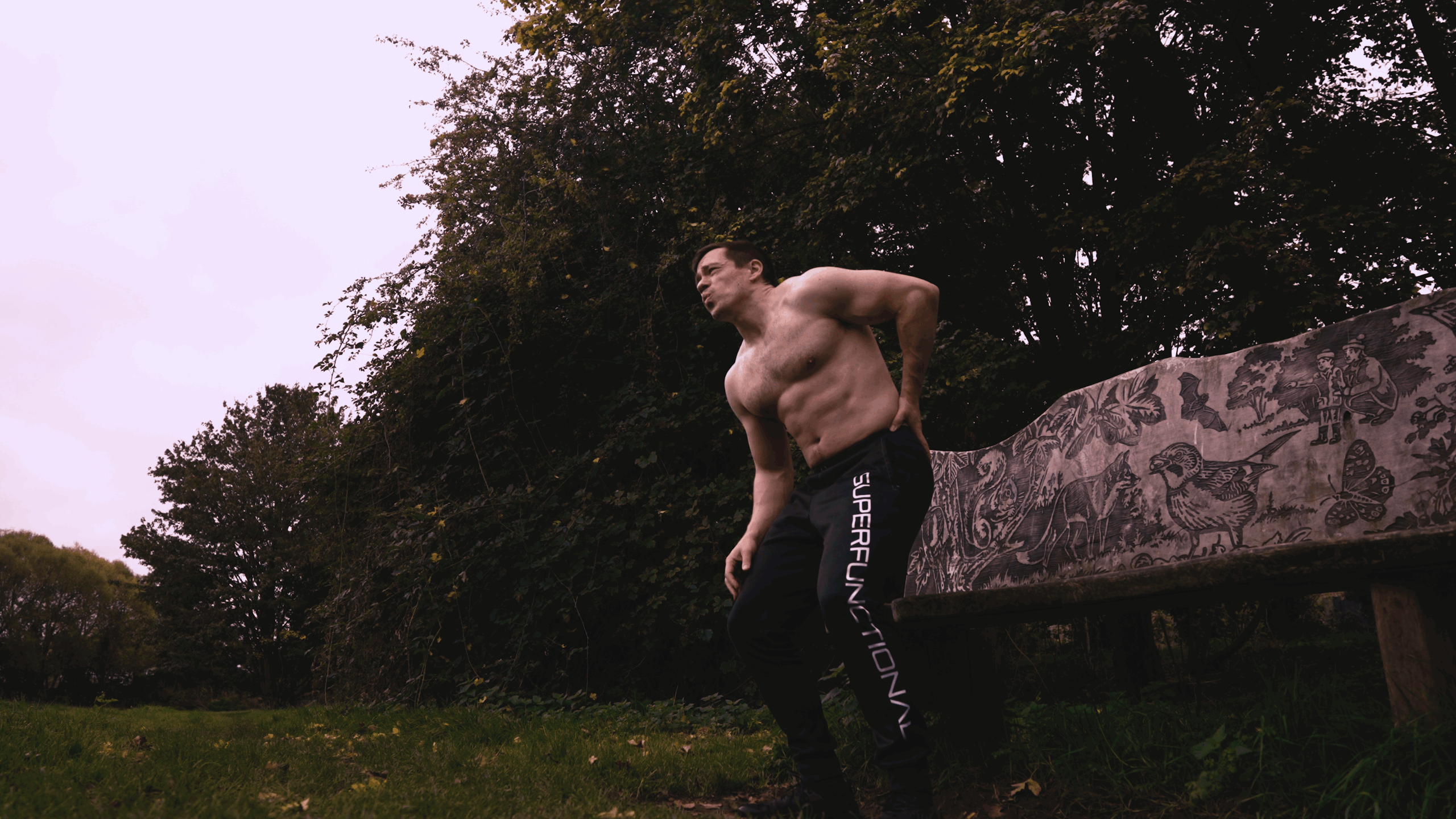
While you can’t rush recovery, understanding what this is can help: there is often no underlying muscle damage (though you should be careful if you’re not confident about this).
Chances are, rather, that a muscle didn’t contract quite as it was expected to, or it temporarily failed. If that’s the case, your goal is now to get the rest of your body to relax and stand down. Warm baths and gentle movements (like a gentle spinal wave) can help a lot.
If you know where the point of failure is, you can also start using this again in order to reintroduce that sense of stability. For example, if my weak left hip caused me to experience a low-back spasm, I could train hip abduction to help restore some stability and reduce tightness.
Once you have recovered, the goal is then to strengthen the muscle or muscles that let you down. This can require a little detective work. Read around, look for limitations or imbalances in your own strength and stability, and try different rehab exercises to see which ones make a noticeable difference.
I’ve been doing exactly that and have massively reduced my tendency toward lower back spasms.
See Someone
With that said, the best way to find out what’s really going on, is to get looked at by an expert. We can guess and experiment but ultimately that’s always going to be inferior to having someone who has studied for years that can look directly at the problem area. Moreover, you may find there are other underlying causes that would be impossible for you to detect.
I’ve said this a few times, and I don’t mean to scare anyone unduly, but you might well be trying to stretch your way out of a tumor.
There’s a lot you can do to address your own injuries and issues. But if they persist then be sensible: if you can afford it, get seen by a professional.
And never see this as a failure. Even the very best athletes in the world get injured. Our strength is borrowed – we don’t own it. Be paitent and find other ways to progress during that recovery.
Love it. This has been the method I’ve taken more or less for the past few years. For simple issues that I can understand it has worked wonders, but there have been a few times when I have got to get professional PT. Great thing about doing that is you also leave with new tools next time you suffer a similar injury.