Grip strength is extremely important when it comes to overall strength. No matter how strong your lats are, you won’t be able to row a heavy weight if you can’t hold onto the bar. Same goes for any lift, really.
Likewise, grip strength is essential for rock climbing. Tree climbing. Rope climbing… Climbing in general.
Grip strength is necessary for lifting and carrying things. For grappling and wrestling. Even for calisthenics skills.
So, pretty much any time you need serious strength in your upper body, you also need a strong grip.
At the same time, your grip strength correlates with your overall ability to generate power. A strong grip suggests that you’re sending powerful signals from the nervous system – so much so that testing grip strength first thing in the morning can be a useful indicator of recovery status and how hard you should train that day.

It’s probably no coincidence that grip strength also correlates with life expectancy, then.
SUPERFUNCTIONAL 3: SUPERMOVER - SPRING SALE!
Supermover is a program that builds an athletic physique and functional performance with short, accessible, & fun home workouts.
GET SUPERMOVER HERE!
The problem is that training grip can be time consuming, especially when you’re already dedicating a huge amount of time to countless other fringe training methods (if you’re anything like me).
What if I told you, then, that there was a way to build grip strength that would take just five minutes a day? That would prime your nervous system for maximum performance for the rest of that day? And that could build maximum power in a way that few other strategies can?
And it’s actually really simple.
The Technique
Let’s start with the instruction and then I’ll move on to why it works.
All you’re going to do, is to grab a ball. Ideally something hard but with a tiny bit of grip – a tennis ball will do just nicely.
Next, you’re going to grab the ball and squeeze it as hard as you can.
Maintain that maximum effort squeeze for 5-7 seconds. Start with five and build up to ten as you become more confident.
Release and then rest for about 90-120 seconds before trying again.
Perform this 3-5 times on both hands.
This is a super convenient drill that you can do while you’re at the computer or doing anything else. I recommend doing it first thing in the morning to give yourself a strength boost for the rest of the day.
So, why does this work so well?
Overcoming Isometrics for Grip
Those who are familiar with this channel will likely already have recognised that this is an overcoming isometric exercise.
That means you’re maximum effort against an immovable object. You’re attempting to crush something that cannot be crushed, in turn meaning that you’re able to utilise your maximum power output. Your fingers aren’t actually moving, the contraction is “static”, but it’s your maximum effort.
This is similar to other forms of overcoming isometrics: such as trying to bench press a bar that’s locked in place in a power rack.
Overcoming isometrics are extremely effective for increasing maximum strength within a limited joint angle. That’s because you’re practicing sending the most powerful signal you can to your existing muscle. You’re practicing the maximum neural drive, recruiting as much muscle fibre as you possibly can for an extended period of time. As a result, you get better at using the muscle you have.
This can be an extremely useful tool for those that are plateauing in their strength training. In the example of the bench press, it can help you to lift more by:
- Teaching you to send the strongest signal possible to your pushing muscles.
- AND letting you target specific joint angles that are otherwise hard to train
Consider that even during a 1 rep max bench press, you only use your maximum strength for a very short duration – maybe a second or two at the hardest part of the lift. As the weight gets higher or lower, different and momentum will mean you’re actually only using maybe 80% or 90% of your 1RM.
This is where an overcoming isometric is different: it lets you practice putting out 100% effort for the entire duration of the attempt. That’s cumulatively FAR MORE than you can accomplish while moving actual weight – but with far less risk and set up along the way.
And by adjusting your position, you can target different parts of the strength curve. The very top of the bench press, for example, where you don’t normally exert as much strength, or the very bottom, where it is most needed.
The only caveats are that this isn’t as good for hypertrophy (without getting into it, the individual fibres don’t experience as much strain which is key for mechanical tension to be effective), and that the transfer is slightly limited to about 30 degrees around the targeted joint angle. That latter point is easily remedied by targeting different positions, though.
A Match Made in Heaven
Setting up a barbell for overcoming isometrics targeting each different big lift is time consuming, though. It also expends a lot of energy and can be tricky. This isn’t something everyone is going to be able to do. And as you can progress without, everyone else might decide it’s ultimately not worth the effort.
BUT training grip using the same strategy is a different story. As we’ve seen: you only need a ball. And you can do it sitting down at your desk while working. It won’t get you hot and sweaty and it isn’t particularly tiring – in fact it can be invigorating and act like a kind of “signal boost” for your nervous system for the rest of the day. Waking you up and helping you to send those stronger signals.
If you don’t carry a ball with you, you can use anything else. Why not try a pinch grip with a book? You can squeeze the table you’re sitting at?
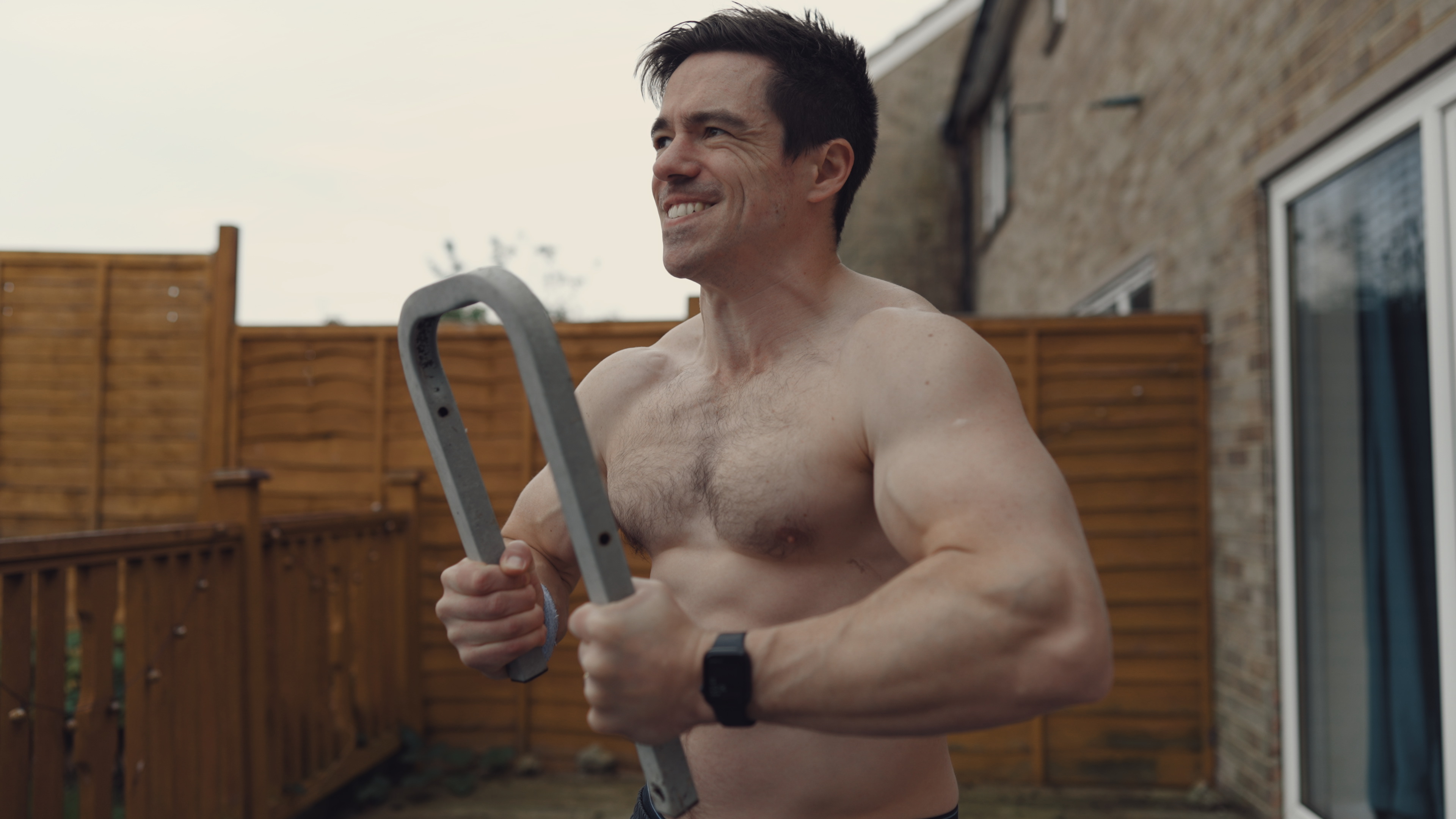
But it will work in just the same way. It will build that maximum neural drive, teaching you to engage more muscle fibre and motor units at any given time. Over a short amount of time, this will lead to a noticeable increase in your grip strength that will translate to greater strength in every other activity that you engage in and absolutely at the gym.
Just remember to rest for the full 90-120 seconds as this will ensure your nervous system has fully recovered and that you’re training your maximum signal rather than endurance or recovery.
The carryover to other aspects of your performance is huge, given the low investment of time and effort. Try incorporating it into your routine!